SUBSCRIBE TO OUR FREE NEWSLETTER
Daily news & progressive opinion—funded by the people, not the corporations—delivered straight to your inbox.
5
#000000
#FFFFFF
To donate by check, phone, or other method, see our More Ways to Give page.
Daily news & progressive opinion—funded by the people, not the corporations—delivered straight to your inbox.
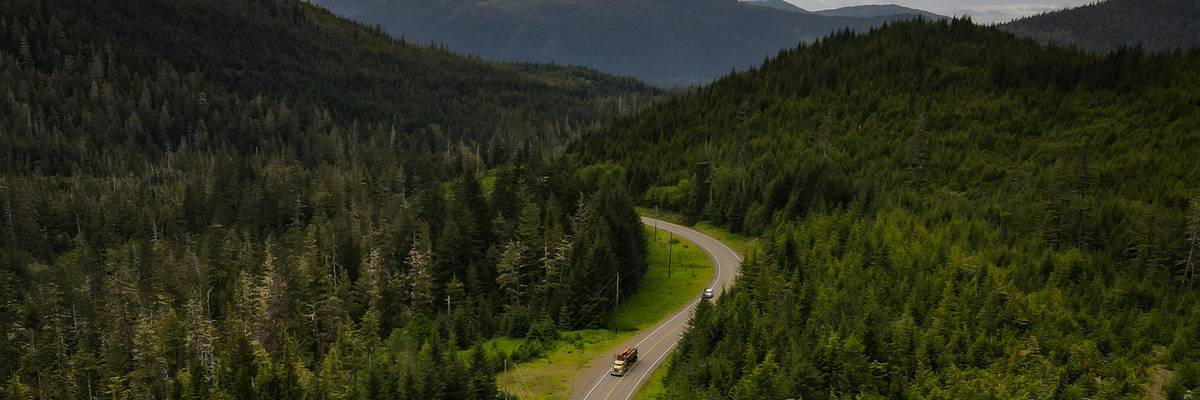
A truck carrying old-growth trees that were recently cut drives on N Island Rd in the Tongass National Forest on Prince of Wales Island, Alaska, Friday, July 2, 2021. (Photo: Salwan Georges/The Washington Post via Getty Images)
The snow builds up at this time of year in the far northern forests of the Tongass in Alaska, blanketing this often lush green landscape. The bears that travel across the ravines during summer are now resting, hibernating until spring. The buzzing that comes from a forest teeming with life is now a peaceful hush, save for the calls of a raven or the soft dampened steps of the elk and deer. Every season we see the Tongass in a new light, offering points of wisdom and ways of being that stretch back farther than humanity. However, as we recognize the beauty of the season, we are also alarmed at how unpredictable the weather has become throughout the year as communities in Alaska are challenged with climate-related extreme weather events--from record breaking snowfall to wind and ice storms to unusually high temperatures.
As communities worldwide feel the ever-worsening impacts of climate change, global forests, like the Tongass, are crucial in collective efforts to combat negative climate impacts due to their ability to sequester vast amounts of carbon.
The Tongass is one of the largest intact temperate rainforests remaining on Earth, spanning across 500 miles of Southeast Alaska, the forest provides habitat and refuge to over 400 wildlife species, including some of the highest concentrations of wolves, bears, and eagles. Approximately the size of West Virginia, the forest is also the foundation of traditional Tlingit lifeways--from cultural and spiritual practices to the food and medicines they depend upon--a tether to the ancestors who have lived in reciprocity and respect with this land since time immemorial.
As communities worldwide feel the ever-worsening impacts of climate change, global forests, like the Tongass, are crucial in collective efforts to combat negative climate impacts due to their ability to sequester vast amounts of carbon. Living forests create and maintain the cycles of air, water and soil that sustain the Earth and our communities. In this context, the Tongass has been heralded as "America's Climate Forest," a global champion in carbon sequestration. According to a 2021 study by Wild Heritage, the Tongass is responsible for holding more than 40% of all carbon stored by U.S. national forests.
Yet, this precious ancient forest has been under attack for decades.
Most recently, in October 2020, the Trump Administration, against the will of the public and tribal leadership, ruled that the Tongass be exempt from the hard-won 2001 National Roadless Rule. Providing environmental protections across nearly 50 million acres of national forest lands, the Roadless Rule is a safeguard for U.S. forests. This policy rollback would have opened up over 9 million acres of previously protected Tongass forest lands to logging, mining, roadbuilding, and further development.
In January 2021, following ceaseless advocacy efforts by tribal leadership, and local and national groups, including the Women's Earth and Climate Action Network (WECAN), there was a key victory--the Biden Administration started the important process to restore Roadless Rule protections in the Tongass. How we respond to this critical moment rests on our collective shoulders; our voices and action can make a significant difference. Right now, advocacy for the Tongass involves public participation through submitting a comment to the United States Forest Service by January 24th. Please join us to secure the fate of the Tongass. Learn more and submit a comment here.
There is no denying the deadly climate extremes that communities are facing globally. If the Biden Administration expects to be the climate leader it promised, the nation's forests must remain protected from further extraction and destruction. We can all take action today to stand with the old-growth trees of the Tongass and forests of the world. Thank you for joining us in protecting the Tongass.
Dear Common Dreams reader, It’s been nearly 30 years since I co-founded Common Dreams with my late wife, Lina Newhouser. We had the radical notion that journalism should serve the public good, not corporate profits. It was clear to us from the outset what it would take to build such a project. No paid advertisements. No corporate sponsors. No millionaire publisher telling us what to think or do. Many people said we wouldn't last a year, but we proved those doubters wrong. Together with a tremendous team of journalists and dedicated staff, we built an independent media outlet free from the constraints of profits and corporate control. Our mission has always been simple: To inform. To inspire. To ignite change for the common good. Building Common Dreams was not easy. Our survival was never guaranteed. When you take on the most powerful forces—Wall Street greed, fossil fuel industry destruction, Big Tech lobbyists, and uber-rich oligarchs who have spent billions upon billions rigging the economy and democracy in their favor—the only bulwark you have is supporters who believe in your work. But here’s the urgent message from me today. It's never been this bad out there. And it's never been this hard to keep us going. At the very moment Common Dreams is most needed, the threats we face are intensifying. We need your support now more than ever. We don't accept corporate advertising and never will. We don't have a paywall because we don't think people should be blocked from critical news based on their ability to pay. Everything we do is funded by the donations of readers like you. When everyone does the little they can afford, we are strong. But if that support retreats or dries up, so do we. Will you donate now to make sure Common Dreams not only survives but thrives? —Craig Brown, Co-founder |
The snow builds up at this time of year in the far northern forests of the Tongass in Alaska, blanketing this often lush green landscape. The bears that travel across the ravines during summer are now resting, hibernating until spring. The buzzing that comes from a forest teeming with life is now a peaceful hush, save for the calls of a raven or the soft dampened steps of the elk and deer. Every season we see the Tongass in a new light, offering points of wisdom and ways of being that stretch back farther than humanity. However, as we recognize the beauty of the season, we are also alarmed at how unpredictable the weather has become throughout the year as communities in Alaska are challenged with climate-related extreme weather events--from record breaking snowfall to wind and ice storms to unusually high temperatures.
As communities worldwide feel the ever-worsening impacts of climate change, global forests, like the Tongass, are crucial in collective efforts to combat negative climate impacts due to their ability to sequester vast amounts of carbon.
The Tongass is one of the largest intact temperate rainforests remaining on Earth, spanning across 500 miles of Southeast Alaska, the forest provides habitat and refuge to over 400 wildlife species, including some of the highest concentrations of wolves, bears, and eagles. Approximately the size of West Virginia, the forest is also the foundation of traditional Tlingit lifeways--from cultural and spiritual practices to the food and medicines they depend upon--a tether to the ancestors who have lived in reciprocity and respect with this land since time immemorial.
As communities worldwide feel the ever-worsening impacts of climate change, global forests, like the Tongass, are crucial in collective efforts to combat negative climate impacts due to their ability to sequester vast amounts of carbon. Living forests create and maintain the cycles of air, water and soil that sustain the Earth and our communities. In this context, the Tongass has been heralded as "America's Climate Forest," a global champion in carbon sequestration. According to a 2021 study by Wild Heritage, the Tongass is responsible for holding more than 40% of all carbon stored by U.S. national forests.
Yet, this precious ancient forest has been under attack for decades.
Most recently, in October 2020, the Trump Administration, against the will of the public and tribal leadership, ruled that the Tongass be exempt from the hard-won 2001 National Roadless Rule. Providing environmental protections across nearly 50 million acres of national forest lands, the Roadless Rule is a safeguard for U.S. forests. This policy rollback would have opened up over 9 million acres of previously protected Tongass forest lands to logging, mining, roadbuilding, and further development.
In January 2021, following ceaseless advocacy efforts by tribal leadership, and local and national groups, including the Women's Earth and Climate Action Network (WECAN), there was a key victory--the Biden Administration started the important process to restore Roadless Rule protections in the Tongass. How we respond to this critical moment rests on our collective shoulders; our voices and action can make a significant difference. Right now, advocacy for the Tongass involves public participation through submitting a comment to the United States Forest Service by January 24th. Please join us to secure the fate of the Tongass. Learn more and submit a comment here.
There is no denying the deadly climate extremes that communities are facing globally. If the Biden Administration expects to be the climate leader it promised, the nation's forests must remain protected from further extraction and destruction. We can all take action today to stand with the old-growth trees of the Tongass and forests of the world. Thank you for joining us in protecting the Tongass.
The snow builds up at this time of year in the far northern forests of the Tongass in Alaska, blanketing this often lush green landscape. The bears that travel across the ravines during summer are now resting, hibernating until spring. The buzzing that comes from a forest teeming with life is now a peaceful hush, save for the calls of a raven or the soft dampened steps of the elk and deer. Every season we see the Tongass in a new light, offering points of wisdom and ways of being that stretch back farther than humanity. However, as we recognize the beauty of the season, we are also alarmed at how unpredictable the weather has become throughout the year as communities in Alaska are challenged with climate-related extreme weather events--from record breaking snowfall to wind and ice storms to unusually high temperatures.
As communities worldwide feel the ever-worsening impacts of climate change, global forests, like the Tongass, are crucial in collective efforts to combat negative climate impacts due to their ability to sequester vast amounts of carbon.
The Tongass is one of the largest intact temperate rainforests remaining on Earth, spanning across 500 miles of Southeast Alaska, the forest provides habitat and refuge to over 400 wildlife species, including some of the highest concentrations of wolves, bears, and eagles. Approximately the size of West Virginia, the forest is also the foundation of traditional Tlingit lifeways--from cultural and spiritual practices to the food and medicines they depend upon--a tether to the ancestors who have lived in reciprocity and respect with this land since time immemorial.
As communities worldwide feel the ever-worsening impacts of climate change, global forests, like the Tongass, are crucial in collective efforts to combat negative climate impacts due to their ability to sequester vast amounts of carbon. Living forests create and maintain the cycles of air, water and soil that sustain the Earth and our communities. In this context, the Tongass has been heralded as "America's Climate Forest," a global champion in carbon sequestration. According to a 2021 study by Wild Heritage, the Tongass is responsible for holding more than 40% of all carbon stored by U.S. national forests.
Yet, this precious ancient forest has been under attack for decades.
Most recently, in October 2020, the Trump Administration, against the will of the public and tribal leadership, ruled that the Tongass be exempt from the hard-won 2001 National Roadless Rule. Providing environmental protections across nearly 50 million acres of national forest lands, the Roadless Rule is a safeguard for U.S. forests. This policy rollback would have opened up over 9 million acres of previously protected Tongass forest lands to logging, mining, roadbuilding, and further development.
In January 2021, following ceaseless advocacy efforts by tribal leadership, and local and national groups, including the Women's Earth and Climate Action Network (WECAN), there was a key victory--the Biden Administration started the important process to restore Roadless Rule protections in the Tongass. How we respond to this critical moment rests on our collective shoulders; our voices and action can make a significant difference. Right now, advocacy for the Tongass involves public participation through submitting a comment to the United States Forest Service by January 24th. Please join us to secure the fate of the Tongass. Learn more and submit a comment here.
There is no denying the deadly climate extremes that communities are facing globally. If the Biden Administration expects to be the climate leader it promised, the nation's forests must remain protected from further extraction and destruction. We can all take action today to stand with the old-growth trees of the Tongass and forests of the world. Thank you for joining us in protecting the Tongass.